Table of ContentsScreen Printing vs. Digital Printing: What’s the Difference?
The Limitations of Screen Printing
1. Limited Color Options
2. Bulk Orders Are More Cost-Effective
3. No Edge-to-Edge Printing
4. Longer Production Time for Complex Designs
Why Screen Printing is Still a Great Option
What are these yard sign limitations you speak of?
Final Thoughts
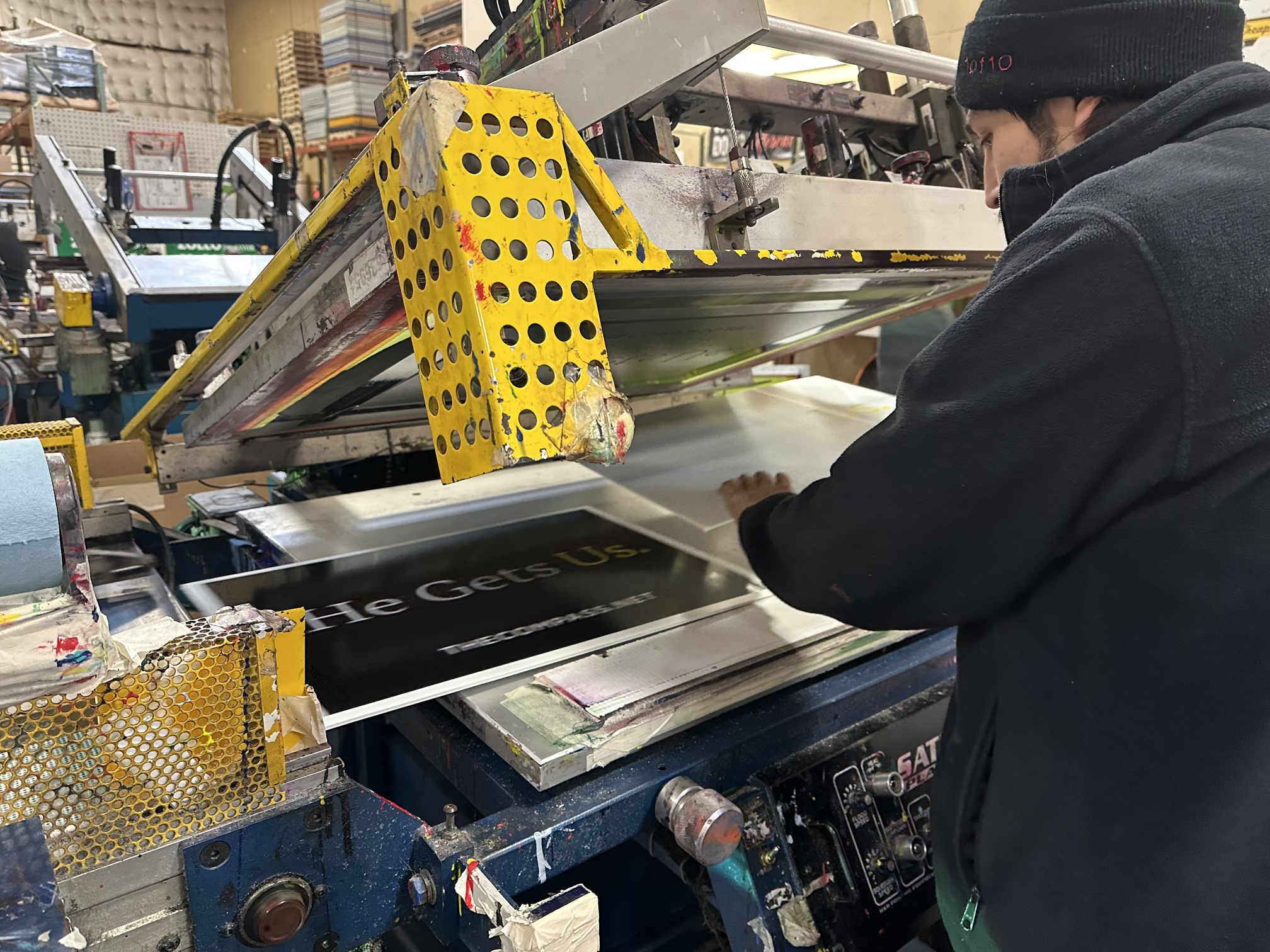
When people ask what I do for a living, I tell them I work at a sign company. Almost every time, the follow-up question is, “What kind of signs?” When I mention screen-printed signs, many people are surprised and ask, “Is that still effective?” or “Do people still do that?” The answer is yes! Screen printing remains a great option for certain types of signage, especially yard signs. But like any printing method, it has its advantages and limitations. Let’s explore the differences between screen printing and digital printing and why screen printing is still a valuable choice.
Screen Printing vs. Digital Printing: What’s the Difference?
To understand the limitations of screen-printed signs, it’s important to compare them to their main alternative—digitally printed signs. In today’s advertising world, digital printing has become more common due to advancements in inkjet and laser printing technology. These methods allow for full-color designs to be printed quickly and efficiently.
Screen printing, on the other hand, can achieve full-color prints, but the process is far more complex. It involves using a four-color process (CMYK—Cyan, Magenta, Yellow, and Black) to layer ink in tiny dots, much like vintage comic books. While this technique can produce high-quality results, it’s much more time-consuming, making it less practical for smaller orders or highly detailed images.
The Limitations of Screen Printing
While screen printing is a great option for specific applications, it does come with a few restrictions that customers should be aware of:
1. Limited Color Options
Screen printing works best with one to three solid colors. Unlike digital printing, which can easily handle gradients and complex color blends, screen printing requires separate screens for each color. This makes full-color designs impractical and costly.
2. Bulk Orders Are More Cost-Effective
Because of the setup required for each color and design, screen printing is best suited for large production runs. If you only need a few signs, digital printing is often the more affordable and convenient option.
3. No Edge-to-Edge Printing
One of the biggest limitations of screen printing is the required blank border around the edges of the sign. A ⅝ to ¾-inch border is necessary to prevent ink from spilling over and smudging. This border also ensures the signs can be handled properly during printing and drying.
4. Longer Production Time for Complex Designs
While simple text and graphics can be produced efficiently, intricate designs with multiple colors require precise alignment. Each layer must be carefully registered to avoid misalignment, which can slow down the production process.