Table of Contents
- The Legal Landscape of Bandit Signs
- How Businesses Stay Under the Radar
- What to Say if You’re Confronted by Law Enforcement
- The Free Speech Debate
- A Smarter Approach to Compliance
- Closing Thoughts
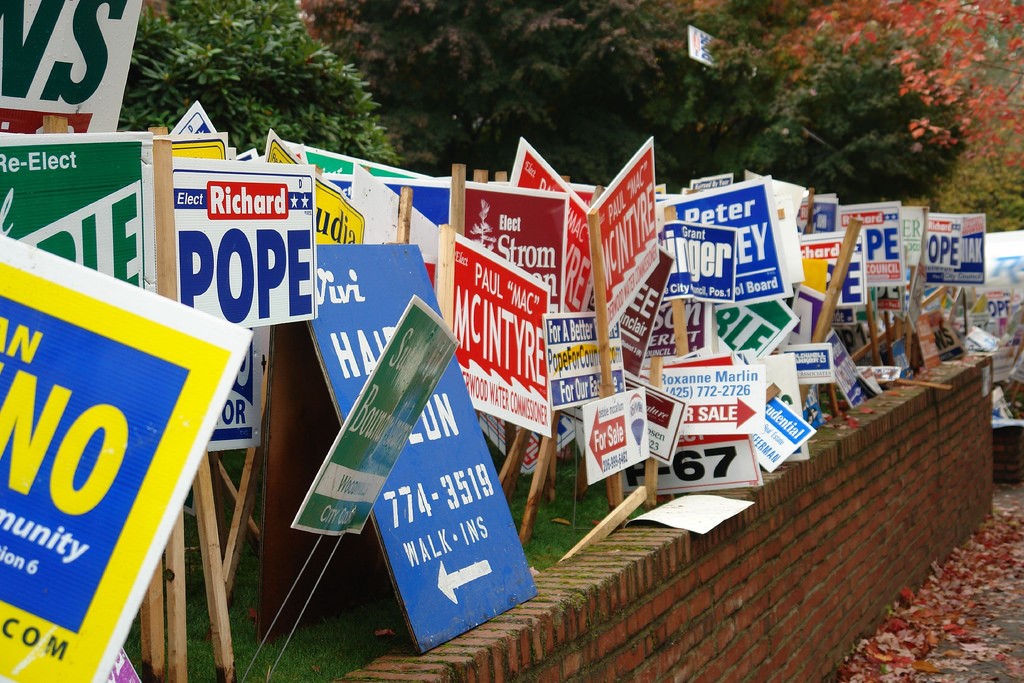
One question we get asked a lot here at Super Cheap Signs is, “Are bandit signs legal?” If you’ve ever driven through a bustling city or a quiet suburb, you’ve likely noticed them: small, colorful signs staked into grassy medians or zip-tied to utility poles, offering everything from “We Buy Houses” to “Affordable Roofing Services.” These are commonly known as bandit signs, and while they’re undeniably effective in grabbing attention, they exist in a gray area of legality.
So, are bandit yard signs illegal? The answer isn’t as straightforward as you might think. The legality of these signs often depends on local ordinances, enforcement practices, and how creative you are in navigating the rules. Let’s dive into the fascinating (and often frustrating) world of bandit yard signs.
The Legal Landscape of Bandit Signs
Most cities and counties have ordinances that regulate or outright ban bandit signs, especially in public spaces like medians, utility poles, or sidewalks. In places like Virginia and Maryland, the fines for posting illegal signs can be hefty—$100 per sign in Virginia and up to $500 per sign in Maryland. These ordinances are usually enforced by local transportation departments or code enforcement officers.
But here’s the catch: enforcement is far from consistent. In many cases, enforcement agencies only act if they catch someone in the act of placing the sign or can trace the sign back to its owner. This creates an opportunity for businesses willing to think outside the box.
How Businesses Stay Under the Radar
Entrepreneurs who rely on bandit signs have developed a variety of strategies to minimize their risk of fines or legal troubles. Here are a few commonly used tactics:
1. Rotating Phone Numbers
Savvy marketers often use temporary or unlisted phone numbers on their signs. By rotating numbers regularly, it becomes nearly impossible for enforcement agencies to trace the signs back to a specific business.
2. Operating After Hours
Signs are usually placed after 6:00 p.m. when local transportation or enforcement offices are closed. This reduces the chances of being caught in the act, as most enforcement activities occur during regular business hours.
3. Creative Sign Placement
Some businesses use telescoping poles to place signs high up on utility poles, where they’re harder to remove. Others use industrial-strength adhesives or two-sided tape to secure signs to metal poles, ensuring they stay up longer.
4. Registered Agents and LLCs
Instead of operating as a sole proprietorship, many businesses form LLCs and designate a registered agent in a location far from the jurisdiction where signs are placed. This creates another layer of separation between the business owner and the signs, making enforcement even more challenging.
What to Say if You’re Confronted by Law Enforcement
If a police officer or enforcement official confronts you about placing a sign, it’s important to stay calm and professional. Here’s a script that many businesses use:
• “Do you have jurisdiction over this matter?”
• “Is this a criminal violation? My lawyer has informed me it’s not.”
• “Thank you for your time. Have a great day.”
Most sign ordinances are civil, not criminal, matters. While an officer may ask you to stop, they typically lack the authority to issue criminal charges related to sign placement.
The Free Speech Debate
One of the most compelling arguments for bandit signs is that they fall under the umbrella of commercial free speech. Court rulings, including the landmark Reed v. Town of Gilbert (2015), have struck down sign ordinances that unfairly favor certain types of speech over others. For example, a law allowing political signs but banning commercial ones is likely unconstitutional.
That said, challenging a sign ordinance in court is expensive. Legal experts estimate it could cost upwards of $500,000 to mount a successful case. For most small businesses, the legal battle isn’t worth the cost.
A Smarter Approach to Compliance
For businesses willing to take a stand, organizations like the ACLU and the Thomas Jefferson Center for the Protection of Free Expression can provide legal support. They may even help with research or connect you to law clinics that reduce the cost of litigation.
But if fighting city hall isn’t in your budget, staying one step ahead of enforcement might be your best bet. By operating strategically, you can keep your business visible without running afoul of the law.
Closing Thoughts
So, are bandit yard signs illegal? In many places, yes—but that doesn’t mean they’re impossible to use. The secret lies in understanding local ordinances, getting creative with your tactics, and knowing when to push back on unfair enforcement.
Love them or hate them, bandit signs are a staple of guerrilla marketing—and for good reason. They’re cheap, effective, and, with the right approach, legal enough to keep your business thriving.
If you’ve had experience with bandit signs or want to share your thoughts, drop a comment below. Let’s keep the conversation going!