Category: From The Trenches

  • Yard Sign Stakes: A Comprehensive Guide to Wire Stakes

    Table of Contents

    What are Those?

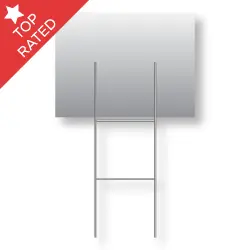
    Ever wonder what those little metal looking wires are that hold up the yard signs? You know, the yard signs you see on the side of the road? They are called H-wire stakes, more commonly called wire stakes or H-wires and they are made of galvanized steel. There seems to be a variety of different types of H-wires but after just learning what they are, how do you know which to get? Here at Super Cheap Signs, we carry 4 options of wire stakes. We’ll go over the different kinds and what they’re best suited for when it comes to displaying your signs.

    The Standard
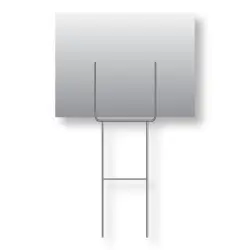
    Standard H-wire

    First, we have the Standard H-wire. They consist of 4, 9-gauge steel wires that are welded together to form an “H” shape, just with two lines in the middle instead of one. These are 30 inches tall and 10 inches wide and best suited for signs no bigger than 24”x 24”. These are the most common type of H-wire to see in the wild and are going to be our base of comparison for the other wire stakes we’re about to go over.

    Half the size, all the hype!
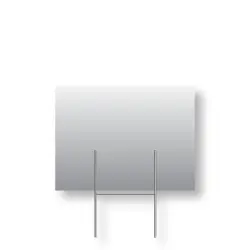
    Half-Size H-wire

    Second, we have Half-size H-wires, which are just as they sound. Imagine taking a standard H-wire and cutting it in half. What you’re left with is 2 half size h wires. Nifty, right? These are only 15 inches tall but still 10 inches wide. Great for keeping your signs low to the ground and create the illusion that the signs are just standing upright on their own. These are also great for areas with higher winds than average. Best for smaller signs but can still hold the traditional 18×24 signs as well.

    Economy’s booming
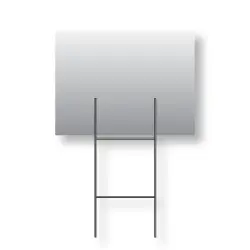
    Economy H-wire

    Third up on our list are Economy H-wires. These are slightly shorter than the standard wire stakes, but still stand tall at 24 inches. These also maintain the same width of 10 inches, as well as 9-gauge steel wire. Being a bit cheaper than the standards, but still offering similar results, economy H-Wires are definitely the more budget friendly option. Plus, if you need something to be displayed lower than the standard but higher than the half size, these are the perfect middle ground.

    Don’t worry, these are Heavy-Duty!

    Heavy-Duty wire stake

    Finally, we have our Heavy-Duty H-wires. These are as the name implies, heavy-duty and meant for places where the ground is tougher than your grandpa. But seriously, the base of these are made from 3-gauge steel wire which is considerably thicker than the 9-gauge the rest are solely made of.  They still have the 9-gauge wires too, just on the top of them so that the signs can still fit. They’re the common choice for displaying signs with sizes like 24×32, 24×36, and 24×48. They can be used for signs as big as 4’x4’, as long as you use two at a time. We recommend using U-channel posts for signs 4’ or taller but this article is about wire stakes, so we’ll come back to that later. Either way, having some heavy duty H-Wires will definitely help your signs stand up to the elements, no pun intended.

    The Choice is Yours!

    The Choice is Yours With all these options, now you have a better idea on what would work best for your specific needs. When in doubt the standard size is going to be the safe bet. They’re the standard for a reason, right? If you have any further questions, check out our accessories page. Don’t hesitate to give us a call at 512-833-9900 and as always, we look forward to keeping on providing you with more sign knowledge in the future.

    TLDR: So… What kind of H-wires are there?

  • The Limitations of Screen-Printed Signs: What You Need to Know

    Table of Contents

    When people ask what I do for a living, I tell them I work at a sign company. Almost every time, the follow-up question is, “What kind of signs?” When I mention screen-printed signs, many people are surprised and ask, “Is that still effective?” or “Do people still do that?” The answer is yes! Screen printing remains a great option for certain types of signage, especially yard signs. But like any printing method, it has its advantages and limitations. Let’s explore the differences between screen printing and digital printing and why screen printing is still a valuable choice.

    Screen Printing vs. Digital Printing: What’s the Difference?

    To understand the limitations of screen-printed signs, it’s important to compare them to their main alternative—digitally printed signs. In today’s advertising world, digital printing has become more common due to advancements in inkjet and laser printing technology. These methods allow for full-color designs to be printed quickly and efficiently.

    Screen printing, on the other hand, can achieve full-color prints, but the process is far more complex. It involves using a four-color process (CMYK—Cyan, Magenta, Yellow, and Black) to layer ink in tiny dots, much like vintage comic books. While this technique can produce high-quality results, it’s much more time-consuming, making it less practical for smaller orders or highly detailed images.

    The Limitations of Screen Printing

    While screen printing is a great option for specific applications, it does come with a few restrictions that customers should be aware of:

    1. Limited Color Options

    Screen printing works best with one to three solid colors. Unlike digital printing, which can easily handle gradients and complex color blends, screen printing requires separate screens for each color. This makes full-color designs impractical and costly.

    2. Bulk Orders Are More Cost-Effective

    Because of the setup required for each color and design, screen printing is best suited for large production runs. If you only need a few signs, digital printing is often the more affordable and convenient option.

    3. No Edge-to-Edge Printing

    One of the biggest limitations of screen printing is the required blank border around the edges of the sign. A ⅝ to ¾-inch border is necessary to prevent ink from spilling over and smudging. This border also ensures the signs can be handled properly during printing and drying.

    4. Longer Production Time for Complex Designs

    While simple text and graphics can be produced efficiently, intricate designs with multiple colors require precise alignment. Each layer must be carefully registered to avoid misalignment, which can slow down the production process.

    Why Screen Printing is Still a Great Option

    Despite these limitations, screen printing remains a highly effective method for specific types of signs. It’s particularly useful for yard signs, real estate signage, and bulk advertising campaigns due to its durability and cost efficiency at high volumes. Plus, the ink used in screen printing is thick and vibrant, resulting in long-lasting and weather-resistant prints.

    What are these yard sign limitations you speak of?

    • In Screen Printing, 1 – 3 colors are ideal, No full color designs (that’s for digital printing).
    • The more the merrier… screen printing is better for bulk orders, not just a few signs.
    • Screen printed signs must have a blank 5/8 – ¾ inch border around the edge as necessary for the printing process, No edge-to-edge printing.

    Final Thoughts

    Screen printing may not be the best choice for every project, but for bulk orders and simple, bold designs, it’s hard to beat. Understanding these limitations can help you make an informed decision when choosing the best printing method for your needs.

    If you’re looking for high-quality screen-printed signs, feel free to stop by or reach out to our customer service team. We’d be happy to help you find the best signage solution for your business or event!

  • Screen vs. Digital Printing: Which One is Right for You?

    Table of Contents

    If you’ve ever needed custom signs, you may have wondered: What’s the difference between screen printing and digital printing? The answer isn’t about which method is better—it’s about which one fits your needs best. Both techniques have their strengths, and understanding how they work can help you make the right choice for your signage needs.

    Let’s break down the pros and cons of screen printing and digital printing so you can decide which option is best for your project.s.

    What is Screen Printing?

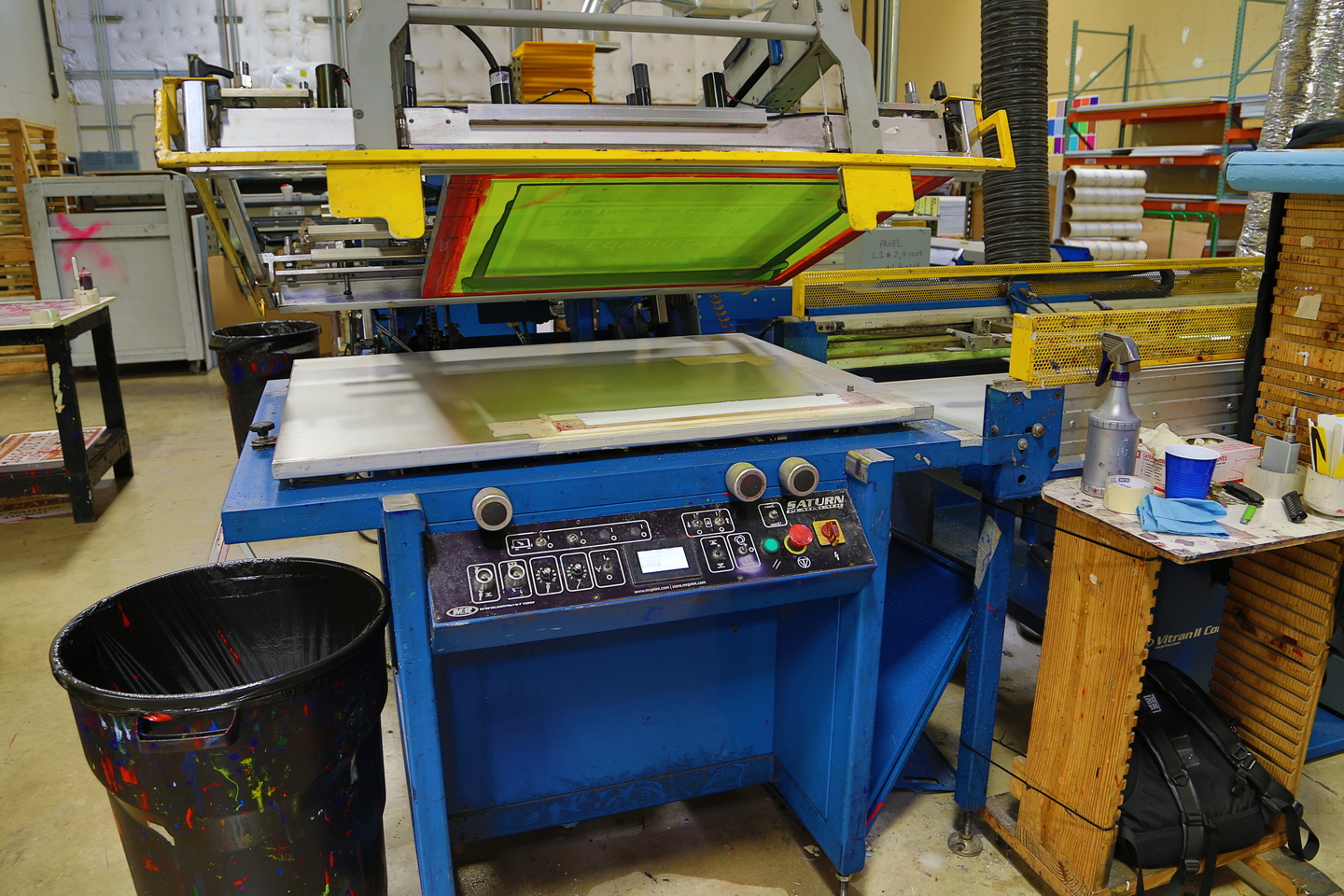
    Screen printing is a tried-and-true method that has been used for decades. It involves transferring ink through a fine mesh screen onto the sign material (typically corrugated plastic for yard signs). The screen is coated with a light-sensitive emulsion, and a stencil is created for the design. Once the stencil is set, ink is pushed through the screen with a squeegee, applying it to the sign surface. The ink is then cured under UV light for durability.

    Pros of Screen Printing:

    • Cost-effective for large orders – The setup process takes time, but bulk printing lowers the cost per sign.
    • Durable for outdoor use – UV-resistant inks ensure signs last 3-5 years, withstanding sun, rain, and wind.
    • Vibrant and glossy colors – The thick ink application results in bold, long-lasting prints.

    Cons of Screen Printing:

    • Limited color options – Typically limited to 1-3 colors per design; full-color printing isn’t feasible.
    • No full-bleed printing – A small ⅓-inch border is required around the edges, preventing edge-to-edge designs.
    • Longer setup time – Requires creating individual screens for each color, making small orders less cost-effective.

    What is Digital Printing?

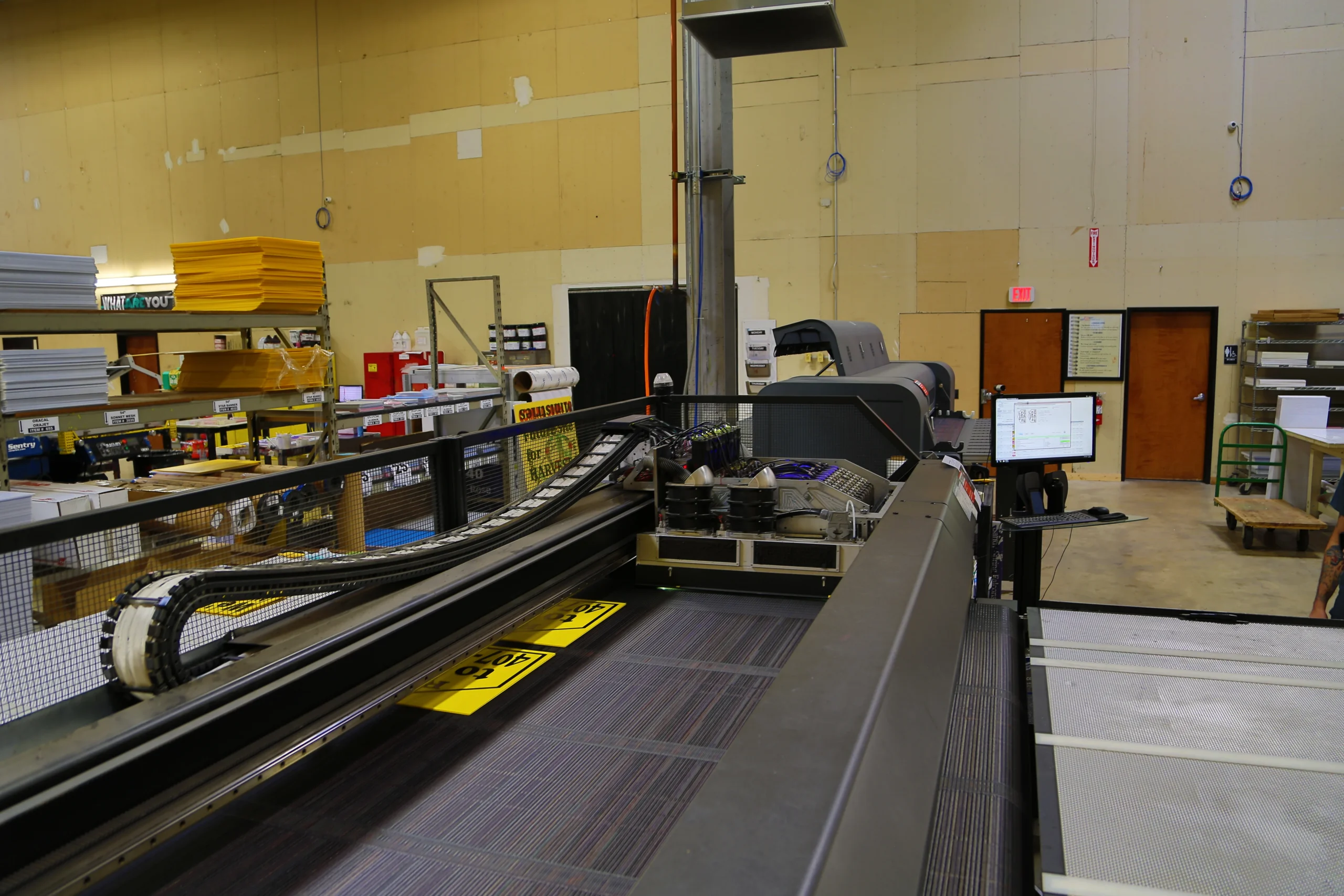
    Digital printing is a modern method that works similarly to an inkjet or laser printer—just on a larger scale. The design is uploaded digitally and printed directly onto the sign material using high-quality UV inks. Unlike screen printing, digital printing allows for full-color, high-resolution images without the need for separate screens.

    Pros of Digital Printing:

    • Full-color capability – Ideal for complex designs, gradients, and detailed graphics.
    • Faster turnaround times – No screen setup means quicker production, perfect for last-minute orders.
    • Full-bleed printing available – The design can extend to the very edge of the sign with no border.

    Cons of Digital Printing:

    • Higher cost per unit – More expensive per sign compared to bulk screen printing.
    • Less durable outdoors – Typically lasts 2-3 years in prolonged outdoor exposure before colors start fading.
    • Not as glossy as screen printing – Colors may not be as bold or shiny as traditional screen-printed signs.

    Which Printing Method Should You Choose?

    The right printing method depends on your needs, budget, and design complexity:

    • Go with screen printing if: You need a large quantity of signs with a simple design and limited colors, and you want them to last for several years outdoors.
    • Choose digital printing if: You need a small batch of signs, require full-color designs, or need a quick turnaround.
    • If you need full-color signs in bulk: Be prepared for a higher cost, as digital printing is more expensive per unit but offers better design flexibility.

    Maximizing Your Sign’s Impact

    Regardless of which printing method you choose, here are a few tips to ensure your signs make an impact:

    • Use high-contrast colors to make your message stand out.
    • Keep the font bold and legible for easy readability from a distance.
    • Include a call-to-action like a website URL, phone number, or QR code.

    Get High-Quality Custom Signs Today

    Whether you need screen-printed signs for a large campaign or digitally printed signs for a small promotion, we’ve got you covered.

    👉 Shop Custom Signs Now and let us help you make a lasting impression!

    Final Thoughts

    Understanding the difference between screen printing and digital printing can help you make a smart investment in your signage. If you’re still unsure which method suits your needs, our customer service team is happy to assist.

    Contact us today for expert guidance and custom sign solutions!

  • Keep It In the Community: Local Marketing

    In our incredibly shrinking world, “local” sounds almost anachronistic. When we can have BFFs across the country or across the globe up close and personal at the stroke of a screen, when couples have transcontinental relationships, when our food is shipped fresh and bright to grocery store shelves from another country, does GPS makes sense anywhere except in a vehicle?

    Surprisingly, yes. The Go Local movement is gaining ground. From farmer’s markets to Yelp reviews, Google Maps to hyper-local ezines, people are hungry to learn more about their immediate neighborhood. Until we can drink virtual latté, this trend will likely continue.

    What does Go Local marketing mean for signage?

    • Sign up for the local angle. Consider affixing “Buy Local” decals to your products or packaging to remind customers you’re a local business, and that by buying your products, their dollars remain in the community to boost the local economy. Your in-store banners and external marketing products such as sandwich boards and spinner signs should all carry the “Buy Local” theme.
    • Socialize locally. Social media is global, but that doesn’t mean your business can’t play up the local focus. On your Facebook page, for instance (yes, your business definitely needs to have one), you can reward new and existing customers who “Like” your page — which also tells other site visitors that they prefer to shop locally. The thank-you for a “Like” can be anything from a one-time discount to a small gift with their next purchase — a simple way to acknowledge support and let them know you appreciate their business. Be sure to include an image of your “Buy Local” signage on your Facebook real estate.
    • Support the community. Does the high school football team need signage for their stadium? Could your town’s SeniorCenter use some help hanging holiday banners, balloons or lights? Every community offers numerous opportunities to make a difference — and the positive PR for your business is a nice side benefit.

    Who knows, with all this local emphasis, you might just find a new best buddy across town, rather than across the world.

  • The Grandfather of Creative Genius

    In Marketing Magic/Part 1, author Debbie Millman discussed how to become a brand genius. Now she deconstructs the creative process itself as she recounts the wisdom of iconic graphic designer Milton Glaser, famous for the I♥NY logo and the poster of Bob Dylan in profile, his hair a psychedelic swirl.

    Celebrated as the greatest living graphic designer, Glaser offers a wealth of insight that can help business owners create compelling signage. Take this story of how he became an artist:

    “When I was a very little boy, a cousin came to my house with a paper bag. He asked me if I wanted to see a bird. I thought he had a bird in the bag. He stuck his hand in the bag, and I realized he had drawn a bird on the side of a bag with a pencil. I was astonished! I perceived this as being miraculous. At that moment, I decided that was what I was going to do with my life. Create miracles.”

    While a sign doesn’t have to be fine art, there’s no telling where tomorrow’s critically acclaimed work will originate. You might think you’re simply designing a banner for your business — but if the combination of design, colors and verbiage strikes a chord, in the cyber age anything is possible. Thanks to YouTube, Facebook, Twitter, Instagram, Pinterest and many other social sites, unknowns become global sensations literally overnight.

    Or maybe it’s a banner flag: the hybrid that makes a bold statement for your business, and is made to endure for seasons to come. At 11.5 feet tall and 2.5 feet wide, banner flags are hard to miss. And with our full-color UV-protected dyes and free design, proofing and logo re-creation, all you need to add is the creative genius.

    So go ahead: create a miracle and let that banner wave all over cyberland, drawing customers to your door and kudos for your artistic brilliance. We’ll just remain quietly in the background.