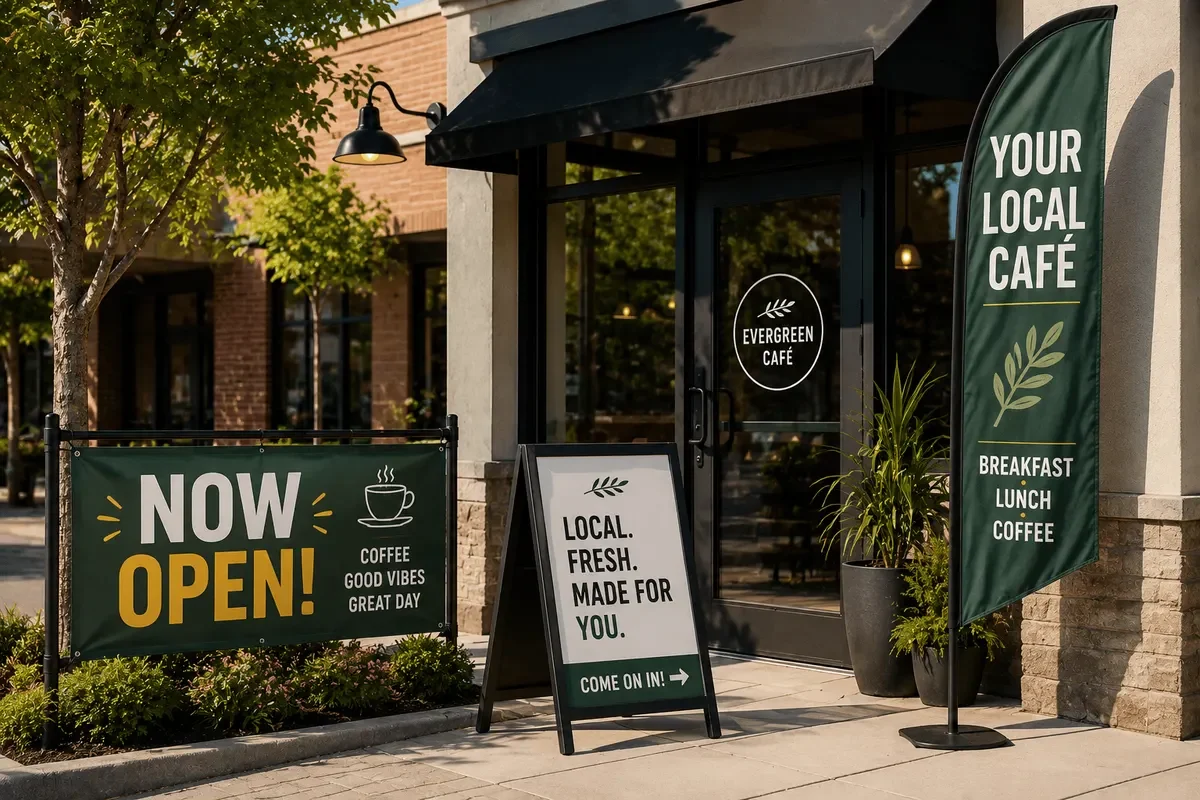
If you’ve ever designed a sign, banner, or yard sign, you’ve probably come across the term full bleed—where the design extends all the way to the edges, leaving no blank borders. It looks sleek, professional, and visually striking. So naturally, you might be wondering, why don’t all signs have full bleed printing? It’s a fair question, and the answer comes down to a few key factors: cost, printing methods, and practical limitations. Let’s break it all down so you can make the best choice for your next sign order.
What is Full Bleed Printing?
First, let’s quickly recap what full bleed means. When a sign is printed full bleed, the ink extends all the way to the edges without any margin. This requires printing on a larger sheet of material and then trimming it down to size to ensure there are no unintended white borders.
Sounds great, right? Well, there’s a catch—or a few, actually.
Why Not Have All Signs Full Bleed?
1. Not All Printing Methods Allow It
One of the biggest reasons full bleed isn’t always an option is the printing process itself. Some types of printing, like screen printing, require a margin (usually about 5/8” or more) because ink is applied using a stencil-like screen. Printing all the way to the edge can cause ink to spill over, leading to smudges, inconsistencies, and messy prints.
For digital printing, full bleed is easier to achieve, but it still requires trimming after printing, which adds extra steps to production.
2. Higher Costs for Full Bleed Printing
Full bleed printing can be more expensive because it requires oversized materials and an extra trimming process. Instead of printing at the exact size of the sign, the design is printed larger and then cut down to ensure no unintended white edges.
If you’re ordering a large quantity of signs (especially for political campaigns, real estate listings, or event promotions), the extra cost of full bleed printing might not be worth it compared to a standard 5/8” bordered design, which is more cost-efficient for bulk orders.
3. Production Time & Waste
Since full bleed signs require additional trimming and finishing, they take longer to produce. Plus, trimming generates extra material waste, which isn’t ideal if you’re trying to keep costs down or be more environmentally friendly.
4. Some Designs Work Better With Borders
Not every sign needs to be full bleed. In fact, some designs actually look better with a 5/8” border, especially those that feature centered text, bold messaging, or simple graphics. A border can help frame the content and make the message easier to read from a distance.