
Starting a business is exciting.
It’s also expensive.
Between permits, equipment, insurance, inventory, software subscriptions, and marketing, it’s easy to feel like every dollar is already spoken for before you ever open your doors.
When you’re looking for ways to save money, one thing often gets pushed to the bottom of the list:
Professional signage.
Ironically, it’s one of the few investments that can begin working for your business from the very first day.
Here’s how to stretch your startup budget without sacrificing visibility.
Prioritize What Customers Actually See
Your customers don’t know:
- How much you spent on your equipment.
- What accounting software you use.
- Which point-of-sale system you chose.
They do notice your storefront.
They notice whether they can find your business.
They notice whether you look established.
For many new businesses, your sign is your first impression—and first impressions matter.
Spend Less on Things That Don’t Generate Customers
It’s easy to overspend on things that don’t directly help bring in business.
For example:
- Expensive office furniture
- Premium software plans you don’t need yet
- Decorative extras
- Branded merchandise before you’ve built a customer base
Instead, focus on the things that help people discover your business.
A professional sign is one of the few startup expenses that works every hour your business is open.
Start Simple
You don’t need every type of sign on day one.
Many successful businesses start with just a few essentials:
- A storefront sign
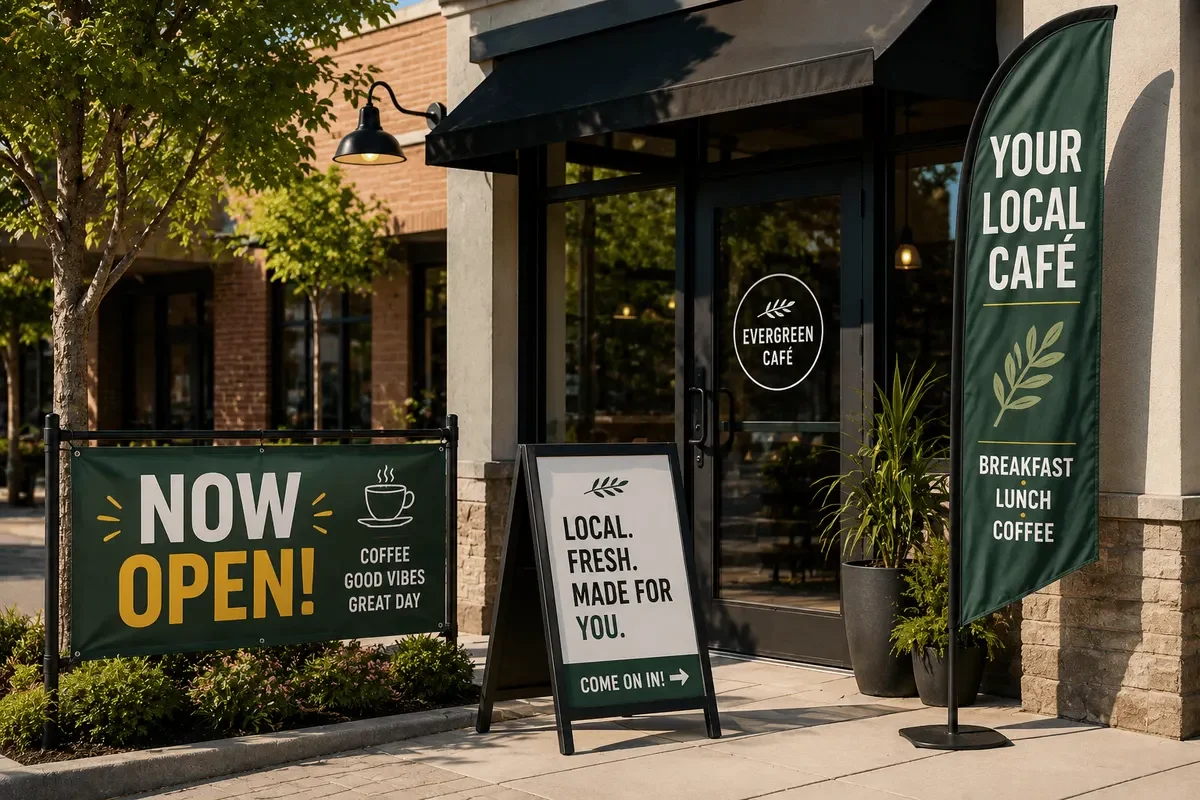
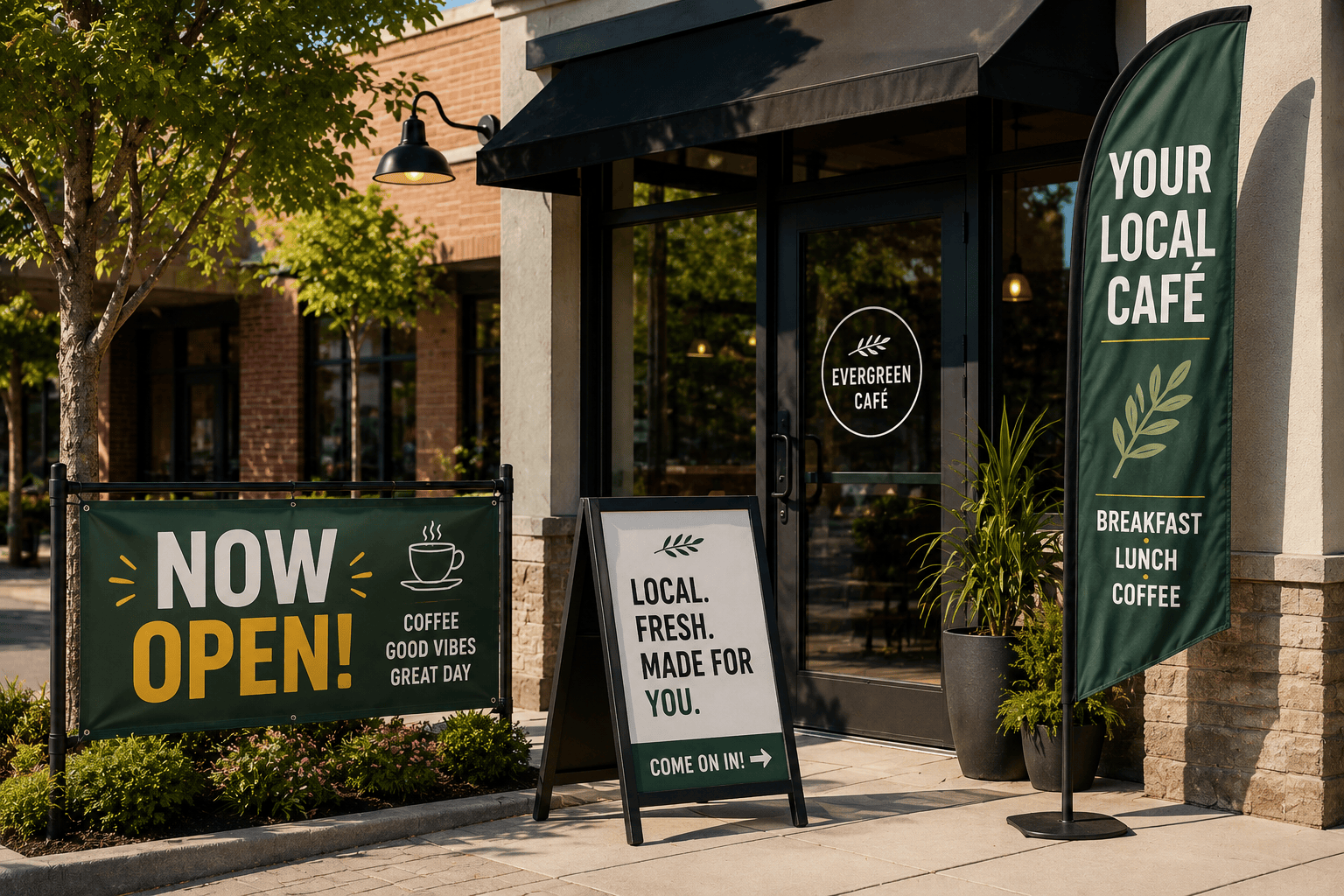
- A vinyl banner announcing they’re open
- Window graphics with business hours
- Directional or parking signs if needed
As your business grows, you can add additional signage for promotions, events, and seasonal campaigns.
Don’t Forget Temporary Signage
Permanent signs are important, but temporary signs have their place too.
Grand openings.
Seasonal sales.
Hiring events.
Holiday promotions.
A simple banner or yard sign can help generate attention without requiring a large investment.